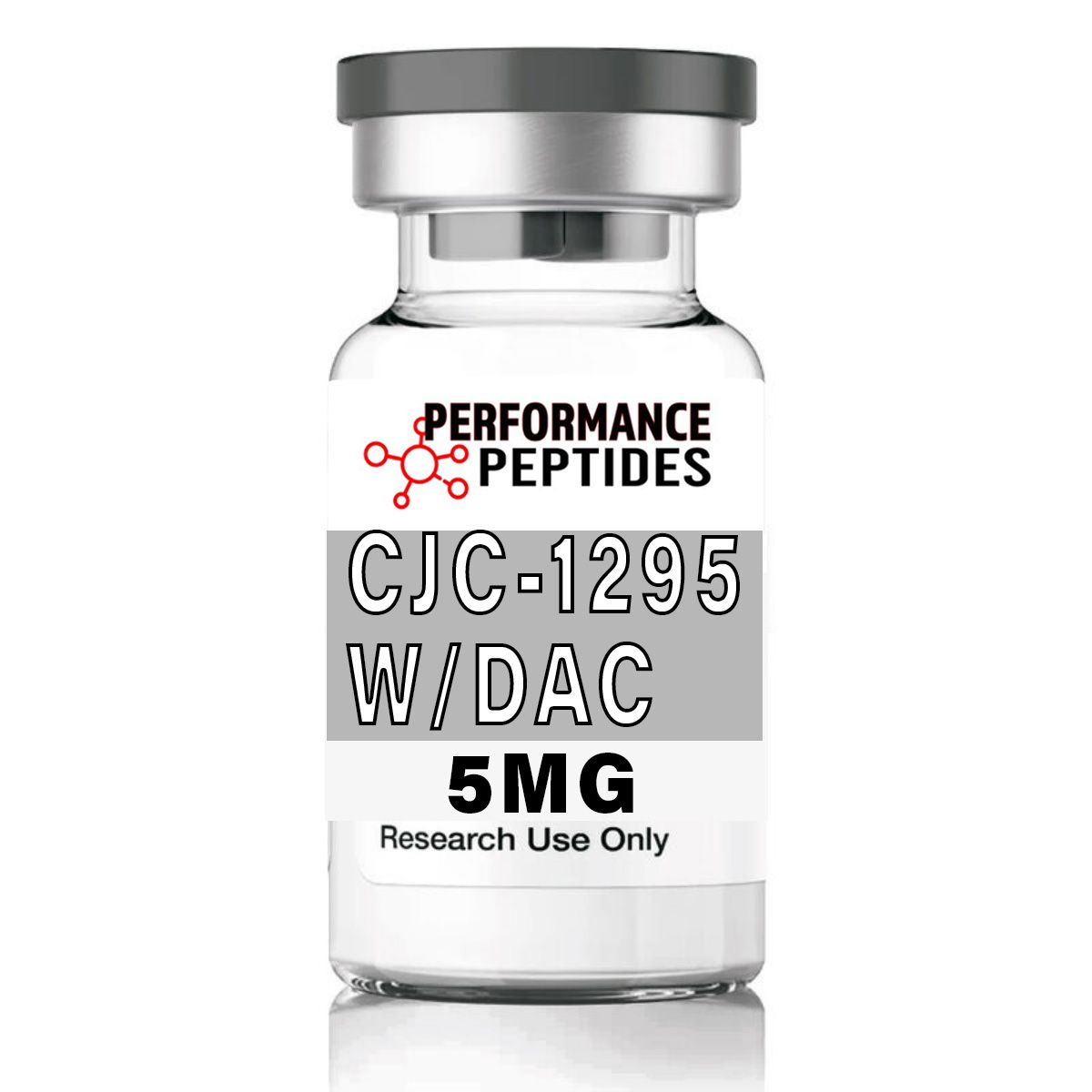
CJC-1295 WITH DAC 5MG KIT
$89.95
Estimated delivery time
Local delivery: tomorrow after 07:30 PM
Shipping: in 2 days
Pickup: in 2 days
In stock: 1 available
Save this product for later
Customer reviews
Reviews only from verified customers
No reviews yet. You can buy this product and be the first to leave a review.
CJC-1295 WITH DAC 5MG KIT
Product Details
Brand: PERFORMANCE PEPTIDES
CJC-1295 is a synthetic growth hormone-releasing hormone (GHRH) analog (peptide) that stimulates the pituitary gland to produce and release more natural growth hormone (GH). It was originally developed to treat diseases, but is now primarily used in anti-aging and wellness applications, often in combination with other peptides like Ipamorelin.
KEY INFORMATION
Mechanism: CJC-1295 acts by binding to GHRH receptors on the pituitary gland, leading to increased production and a more sustained, natural release pattern of GH and Insulin-like Growth Factor-1 (IGF-1). It avoids the sharp spikes in hormone levels associated with synthetic HGH injections.
FORMS:
CJC-1295 with DAC (Drug Affinity Complex): This form has an extended half-life of about 6-8 days because it binds to albumin in the bloodstream, allowing for less frequent dosing (e.g., once weekly).
CJC-1295 without DAC (also known as Modified GRF 1-29): This version has a much shorter half-life (around 30 minutes) and requires more frequent injections to maintain its effects, producing a more pulsatile release pattern.
REGULATORY STATUS:
The peptide is an investigational compound and is not approved by the FDA for human clinical use. Its use is limited to clinical trials or research protocols. It is also a prohibited substance under the World Anti-Doping Agency (WADA) list due to its performance-enhancing effects.
POTENTIAL BENEFITS AND COMMON USES
CJC-1295 is often used as part of a medically supervised wellness plan, typically in combination with the peptide Ipamorelin, for a range of potential benefits:
Body Composition: Increased lean muscle mass and reduced body fat.
Recovery and Repair: Faster recovery from workouts and injuries and improved tissue repair.
Sleep Quality: Promotion of deeper, more restorative sleep.
Anti-Aging: Improved skin elasticity, increased bone density, and enhanced immune system function.
Energy and Cognition: Increased energy levels, improved mental clarity, and enhanced focus.
SIDE EFFECTS AND CONSIDERATIONS
Side effects are generally considered mild and most often include reactions at the injection site (redness, pain, swelling) or flushing, headaches, and some water retention.
It is crucial to consult with a qualified healthcare provider before considering CJC-1295 therapy to weigh potential benefits against risks and determine if it is appropriate for your health needs
DAC
Drug Affinity Complex (DAC) is a bioconjugation technology used to extend the half-life and duration of action of peptide drugs by binding them to circulating albumin in the bloodstream.
MECHANISM OF ACTION
The DAC technology involves chemically modifying a peptide analogue to include a reactive group (typically a maleimide) that selectively binds to the free thiol group of Cysteine-34 on the human serum albumin protein. This creates a stable, non-covalent bond.
KEY FEATURES OF THIS MECHANISM:
PROTECTION: Binding to albumin protects the peptide from rapid enzymatic degradation (peptidase breakdown).
PROLONGATION: The large albumin complex prevents the drug from being quickly filtered and excreted by the kidneys.
SUSTAINED RELEASE: The bond allows for a slow, continuous release of the active drug component, resulting in a significantly extended half-life.
Application in CJC-1295
The most common application of the DAC technology is with the synthetic growth hormone-releasing hormone (GHRH) analog called CJC-1295.
CJC-1295 without DAC (Mod GRF 1-29): This version has a short half-life of approximately 30 minutes, requiring daily or multiple daily injections to maintain effect.
CJC-1295 with DAC: The addition of the DAC significantly extends the half-life to about 6-8 days, allowing for once or twice-weekly dosing. This results in a sustained, non-pulsatile elevation of growth hormone (GH) and insulin-like growth factor 1 (IGF-1) levels.
DAC vs. No DAC in Therapy
The choice between formulations depends on therapeutic goals:
CJC-1295 without DAC more closely mimics the body's natural, pulsatile release of GH.
CJC-1295 with DAC offers convenience due to less frequent injections but results in a constant GH elevation that is not physiological and may have different side effect profiles.
The technology has broad applicability for other therapeutic peptides, such as an insulin formulation (PC-DAC™: Insulin), to improve efficacy and patient adherence by reducing injection frequency
Display prices in:USD