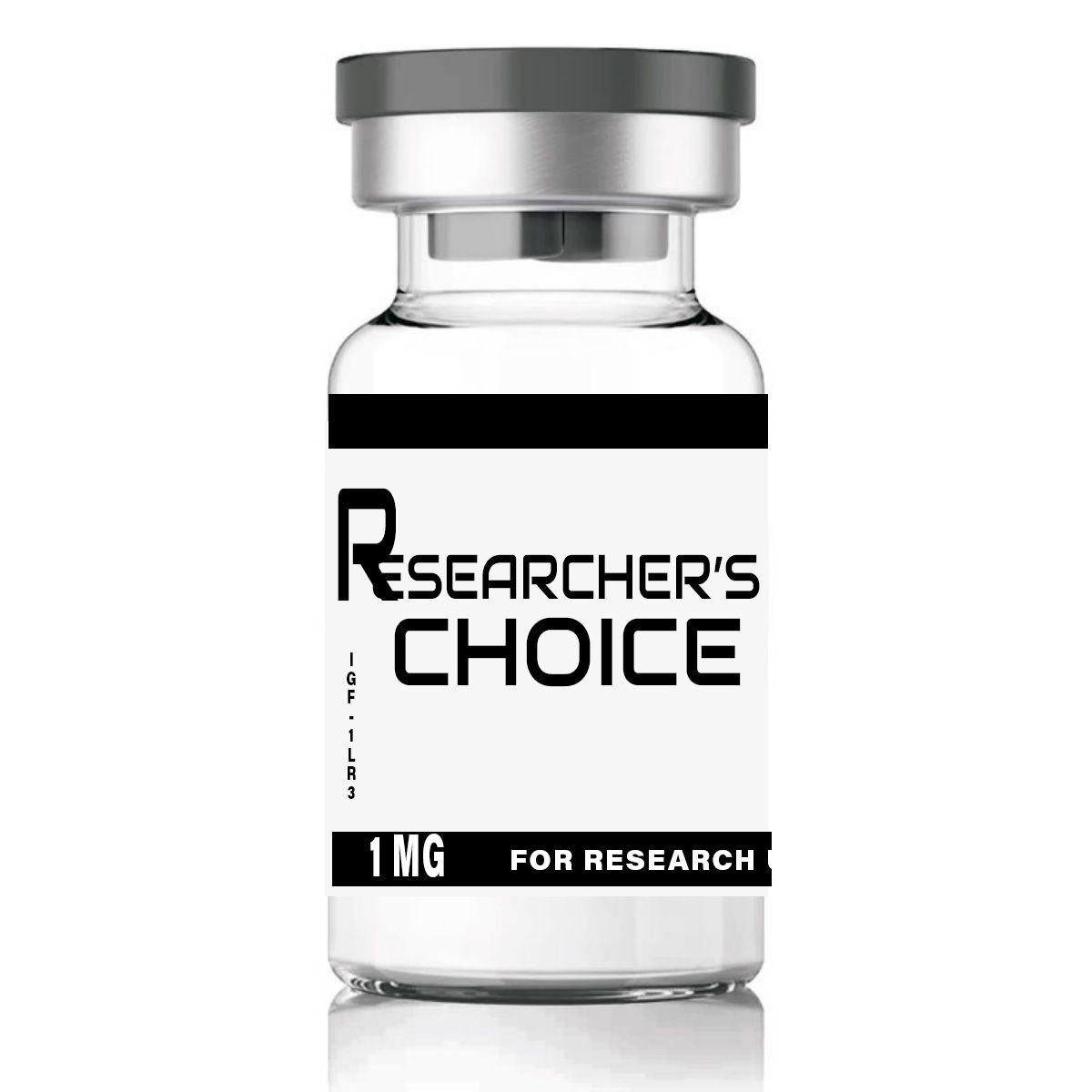
IGF-1 LR3 1MG KIT
$149.95
CUSTOMER COMMENTS / SUGGESTIONS / REQUESTS
Enter your text
Estimated delivery time
Shipping: 1–2 days
Pickup: tomorrow, 10:30 AM–06:30 PM
In stock: 1 available
Save this product for later
Customer reviews
Reviews only from verified customers
No reviews yet. You can buy this product and be the first to leave a review.
Have questions?
IGF-1 LR3 1MG KIT
Product Details
Brand: RIGHTEOUS SPORTS NUTRITION
KIT INCLUDES-1MG POWDER VIAL, 2ML BA WATER, 5 INSULIN NEEDLES
ONE 1MG VIAL (1ML/100UNITS) = 10-20 DOSES (10-20 UNITS EACH DOSE)
IGF-1 LR3 is a synthetic, modified analog of Insulin-like Growth Factor 1, designed to be more potent and longer-acting than natural IGF-1 by having reduced binding to IGF binding proteins (IGFBPs), allowing it to stay in the body longer (around 2-3 days) and stimulate cell growth, muscle repair, and potentially metabolism
It's used in research for stem cell maintenance and investigating growth, but it's distinct from natural
IGF-1 and carries potential side effects like low blood sugar (hypoglycemia) and effects on insulin levels, often used off-label in bodybuilding for muscle gain.
This powerful synthetic peptide offers a unique ability to stimulate new muscle cell formation (hyperplasia) while accelerating recovery and improving performance — all with minimal androgenic risk. Unlike HGH, IGF-1 LR3 acts directly on tissues, bypassing the liver, and delivers faster, more targeted growth effects — making it a favorite in both cutting and lean bulking cycles.
IGF-1 LR3 has quickly gained traction among men and women looking to:
Accelerate muscle recovery
Add dense, lean tissue
Preserve muscle during cutting
Rebuild after a cycle or injury
Improve performance without androgenic side effects
HOW IGF-1 LR3 WORKS IN THE BODY
Synthetic Analog: An altered version of natural IGF-1 with extra amino acids, making it more stable.\Low
Binding: It doesn't bind strongly to IGFBPs, prolonging its activity in the body (long half-life).
Potent Growth Factor: Stimulates muscle protein synthesis, cell proliferation, and tissue repair, similar to IGF-1.
IGF-1 LR3 promotes growth and recovery by binding to IGF-1 receptors located on skeletal muscle, organ, and nerve cells — triggering the PI3K/Akt/mTOR pathway. This cascade leads to increased protein synthesis, cell proliferation, and glucose uptake.
Unlike anabolic steroids that primarily increase the size of existing muscle fibers (hypertrophy), IGF-1 LR3 may also promote hyperplasia — the formation of new muscle cells — a potential advantage for long-term growth.A
IGF-1 LR3 ALSO SUPPORTS:
Enhanced insulin sensitivity: By mimicking insulin-like action, IGF-1 LR3 improves glucose transport into muscle cells, aiding in nutrient partitioning and glycogen storage — especially when paired with post-workout carbs and protein like Swolverine Whey Isolate.
Accelerated recovery: IGF-1 promotes repair and regeneration of damaged tissue, making it valuable post-injury or following intense hypertrophy training.
Fat oxidation: Elevated IGF-1 levels are associated with increased fat metabolism and lean mass preservation during caloric deficits — making it a popular choice during cutting cycles.
Because IGF-1 LR3 acts independently of the liver (unlike HGH), it produces localized and systemic growth effects without relying on conversion — which means more consistent outcomes across users. This also makes it a popular stacking option alongside peptides like BPC-157, MK-677, or traditional testosterone-based anabolic cycles.
USES & EFFECTS
Research: Used to maintain pluripotent stem cells and study growth.
Off-Label (Bodybuilding): Promotes muscle growth (hypertrophy) and fat loss due to its anabolic properties.
Potential Medicinal: Research explores its role in heart function, metabolic health, and even fetal growth.
BENEFITS OF IGF-1 LR3 FOR MEN AND WOMEN
While IGF-1 LR3 works through the same biological mechanisms in all users, the benefits can be tailored and optimized based on your training phase, physique goals, and sex-specific hormonal profile.
BENEFITS FOF IGF-1 LR3 FOR MEN
1. INCREASED LEAN MUSCLE MASS
IGF-1 LR3 stimulates both hypertrophy and hyperplasia, meaning it can increase the number of muscle cells — not just their size. This makes it an ideal tool for long-term muscle density, especially when stacked with testosterone or anabolic SARMs like LGD-4033 (Ligandrol).
2. ENHANCED RECOVERY BETWEEN WORKOUTS
IGF-1 LR3 speeds up muscle tissue repair and reduces soreness, making it particularly useful during high-volume training or CrossFit-style programming. When combined with nutrients from Swolverine INTRA, it further supports hydration and cellular energy restoration.
3. INCREASED NUTRIENT PARTITIONING
By improving insulin sensitivity and glucose uptake, IGF-1 LR3 helps shuttle nutrients directly into muscle tissue instead of fat. This makes it highly synergistic with a clean bulking phase supported by high-protein meals and Whey Protein Isolate.
4. JOINT AND CONNECTIVE TISSUE REPAIR
IGF-1 plays a key role in tendon and ligament recovery, which can be further supported with Collagen, Protein and BPC-157 protocols for deeper healing and injury prevention.
BENEFITS OF IGF-1 LR3 FOR WOMEN
1. RECOMPOSITION WITHOUT ANDROGENIC RISK
Unlike anabolic steroids, IGF-1 LR3 is non-androgenic, meaning it won’t cause masculinizing side effects like voice deepening or facial hair. For women, this makes it ideal for body re-composition — promoting lean muscle gain while preserving feminine physique and hormonal balance.
2. MUSCLE TONE AND FIRMNESS
IGF-1 LR3 supports subtle increases in muscle tone, particularly in the glutes, shoulders, and legs — without significant weight gain or bloating. This makes it popular for fitness competitors and women entering a mini-cut.
3. FASTER RECOVERY FROM TRAINING OR INJURY
Women tend to experience more joint laxity and soft tissue injuries, especially during menstruation. IGF-1 LR3 can help accelerate repair and reduce downtime. Recovery is enhanced when paired with high-quality sleep support like ZMA , which supports natural testosterone and growth hormone production.
4. SKIN, HAIR, AND COLLAGEN SUPPORT
Because IGF-1 increases collagen synthesis and cell turnover, many users report improved skin elasticity, reduced fine lines, and thicker hair — especially when combined with Collagen and a micronutrient-rich diet.
CYCLE PROTOCOL FOR MEN
The typical daily dosage of IGF-1 LR3 ranges from 0.2mg (20 UNITS) to 0.5mg (50 UNITS), administered via subcutaneous injection, usually post workout or fasted AM on rest days. SUBCUTANEOUSLY (SQ) means beneath the skin, specifically into the fatty tissue layer just under the dermis.
- Dosage: 0.2mg–0.5mg per day (20-50 UNITS)
- Frequency: Daily, 5–7x/week
- Timing: Immediately post-workout (or fasted AM on rest days).
- Cycle Length: 4–6 weeks standard, up to 8 weeks with breaks
- Injection Site: Subcutaneous or intramuscular, often rotated (arms, legs, glutes)
CYCLE PROTOCOL FOR WOMEN
The typical daily dosage of IGF-1 LR3 ranges from 0.1mg (10 UNITS) to 0.2mg (20 UNITS), administered via subcutaneous injection, usually post workout or fasted AM on rest days. SUBCUTANEOUSLY (SQ) means beneath the skin, specifically into the fatty tissue layer just under the dermis.
- Dosage: 0.1mg–0.2mg per day (10-20 UNITS)
- Frequency: 4–5x/week preferred (to allow better hormonal regulation)
- Timing: Post-workout or morning before first meal
- Cycle Length: 3–4 weeks standard; 5–6 weeks max with breaks
- Injection Site: Subcutaneous preferred for consistent delivery
SIDE EFFECTS
Can cause hypoglycemia (low blood sugar), water retention, joint pain, and potentially affect insulin sensitivity.
Administration: Injected, usually subcutaneously.
Legality/Regulation: Often sold for research purposes only and used without medical supervision.
IGF-1 LR3 is often described as one of the "cleaner" enhancement compounds — and compared to anabolic steroids, that’s true. It doesn’t suppress endogenous testosterone, doesn’t aromatize into estrogen, and carries no direct androgenic side effects. But because it modifies cellular growth, it’s critical to use it with caution, awareness, and responsible cycle lengths.
1. HYPOGLYCEMIA (LOW BLOOD SUGAR)
Because IGF-1 mimics insulin, it can cause increased glucose uptake into cells — which, without adequate carb intake, may lead to symptoms of hypoglycemia (shakiness, fatigue, dizziness).
Prevent it with:
Adequate post-injection carbs (e.g., Clean Carbs)
Avoiding fasted training unless specifically adapted
Monitoring symptoms if using with insulin, MK-677, or low-carb diets
2. INJECTION SITE IRRITATION
While rare, some users report redness or irritation at the injection site — especially with subcutaneous delivery. This can often be avoided with proper rotation of sites, sterile injection practices, and avoiding repeated injections in the same area.
3. INSULIN RESISTANCE (IF MISUSED LONG-TERM)
Paradoxically, while IGF-1 LR3 can improve insulin sensitivity when used properly, chronic overuse may lead to receptor desensitization and eventual insulin resistance — especially when paired with poor diet.
To avoid this:
Cycle IGF-1 LR3 for no more than 6–8 weeks
Take 4–6 weeks off before beginning another cycle
Support insulin function with L-Glutamine, INTRA, and nutrient-dense meals
4. ORGAN GROWTH CONCERNS AT HIGH DOSES
Because IGF-1 acts on all tissue — not just muscle — megadosing for extended periods may promote organ tissue hypertrophy, including intestinal walls and heart tissue. This is not a concern at standard dosages (10–40 mcg/day) for under 8 weeks, but should be avoided by those with a history of cancer or uncontrolled growth conditions.
5. MENSTRUAL IRREGULARITIES IN WOMEN (RARE)
While IGF-1 LR3 is not androgenic, some women may notice minor shifts in menstrual timing or libido, especially when used alongside SARMs or aggressive training. These effects are typically subtle, short-lived, and reversed after the cycle ends.
Used responsibly — with adequate nutrition, breaks between cycles, and support from supplements like ZMT, Multivitamin, and Vitamin D3 — IGF-1 LR3 offers a powerful tool for performance without harsh hormonal disruption.
STORAGE
LYOPHILIZED POWDER: freeze at −20 °C (−4 °F) for up to12 months;
AFTER RECONSTITUTION: refrigerate at 2–8 °C (35.6–46.4 °F) and use within 30 days; avoid repeated freeze–thaw cycles.
RECONSTITUTION
IGF-1 LR3 1mg/1mL VIAL
Inject 1ml (100 UNITS) of bacteriostatic water into the vial of powder
You May Also Like
Display prices in:USD